Buying guide Skin Care Sunscreen
How to Choose a Sunscreen: SPF, Broad Spectrum and Texture Explained
The short answer
Choosing a sunscreen comes down to a few checks on the US label: SPF 30 or higher, the words Broad Spectrum so it covers UVA as well as UVB, water resistance of 40 or 80 minutes if you will sweat or swim, and a texture you will wear every day, applied generously and reapplied every two hours outdoors. This guide explains what each label term means, how texture should change with your skin type and climate, when a tinted sunscreen with iron oxides helps pigmentation-prone skin, and how to tell whether a bottle has expired.
Key takeaways
- SPF measures protection from UVB; the words Broad Spectrum on a US label mean it protects against UVA too.
- The American Academy of Dermatology recommends Broad Spectrum SPF 30 or higher, and water resistance when you will sweat or swim.
- Water resistance is tested for 40 or 80 minutes; no sunscreen is waterproof.
- Match texture to your skin: gel or fluid for oily skin, cream for dry skin, and a fragrance-free formula for sensitive skin.
- Most people apply far too little: at least a teaspoon for the face and about an ounce for the body.
- UVA passes through window glass, so sunscreen still matters near windows and on long drives.
On this page
Choosing a sunscreen gets easier once you know which words on a US label actually matter. SPF covers one type of UV ray, Broad Spectrum confirms protection from the other, water resistance tells you how long it holds up in sweat or water, and texture decides whether you will actually wear it every day. This guide walks through each of those, plus tinted formulas, expiry, and the everyday habits that affect protection more than the brand you pick.
What does SPF actually measure?
SPF (Sun Protection Factor) measures protection against UVB rays, the ones mainly responsible for sunburn. According to the American Academy of Dermatology, SPF 30 blocks about 97% of UVB rays; higher numbers block slightly more, but no sunscreen blocks 100%. The AAD recommends SPF 30 or higher for everyday use, while the FDA’s floor is lower: any sunscreen under SPF 15 must carry a warning that it only helps prevent sunburn. A high SPF is never a reason to apply less or reapply less often.
What does Broad Spectrum mean on a US label?
Broad Spectrum means a sunscreen protects against UVA rays as well as UVB, and in the US a product can only say it after passing the FDA’s broad spectrum test. The American Academy of Dermatology describes UVA as the rays that prematurely age skin, causing wrinkles and age spots, and notes that they pass through window glass, yet the SPF number says nothing about them. That is why the words Broad Spectrum beside the SPF matter as much as the number itself.
The FDA also requires a warning on sunscreens that fall short. A product that is not Broad Spectrum, or has an SPF below 15, must carry a “Skin Cancer/Skin Aging Alert” in its Drug Facts saying it has been shown only to help prevent sunburn, not skin cancer or early skin aging. If you see that alert, choose something else for everyday protection.
| Label term | What it tells you | What to look for |
|---|---|---|
| SPF | Protection from UVB, the rays that mainly cause sunburn | SPF 30 or higher for daily use |
| Broad Spectrum | It passed the FDA test for UVA as well as UVB protection | These words next to the SPF |
| Water resistant (40 or 80 minutes) | How long the SPF holds while you swim or sweat | Either time if you will swim or sweat; nothing is waterproof |
| Skin Cancer/Skin Aging Alert | The product only helps prevent sunburn | Skip it for everyday protection |
| Active Ingredients | The UV filters and their percentages, in the Drug Facts box | Zinc oxide or titanium dioxide if you want mineral filters |
| Expiration date | When the maker stops vouching for the formula | A date, or note when you bought it |
Sunscreens made for other markets use different systems for the same idea: many Asian sunscreens carry a PA rating, and European ones may show UVA in a circle. Those symbols are not part of US labeling, so judge a US sunscreen by its Broad Spectrum claim and SPF.
Scroll sideways to see the whole diagram.
What does water resistance mean?
“Water resistant” on a US label means the sunscreen was tested and kept its SPF for a set time, either 40 or 80 minutes, while swimming or sweating, and the label must say which. It does not mean waterproof: the FDA notes that no sunscreen is waterproof and all of them eventually wash off. A sunscreen with no water-resistance claim has not been tested to keep its protection while you swim or sweat.
US sunscreen directions also say to reapply immediately after towel drying, so top up as soon as you towel off, and again once the labeled time is up if you are still in the sun.
Chemical filters, mineral filters, or both?
Every US sunscreen lists its UV filters under Active Ingredients in the Drug Facts box. If the only actives are zinc oxide, titanium dioxide or both, it is a mineral (physical) sunscreen; if neither appears, it is a chemical sunscreen; and a mix of the two is a hybrid. The difference affects texture, white cast and sensitivity more than raw effectiveness, and the filters you will see on US labels are the ones the FDA permits, a shorter list than in Europe or Asia. See our comparison of chemical vs mineral sunscreen for how each type works and what the FDA has said about them.
Which texture suits your skin type?
- Oily or acne-prone skin usually does best with a gel, fluid or dry-touch lotion labeled non-comedogenic. See our sunscreens for oily skin for specific picks.
- Dry skin often prefers a cream-based sunscreen or a moisturizer-sunscreen hybrid, since a very light fluid may not feel like enough on its own.
- Normal or combination skin can usually use a standard lotion comfortably in most conditions.
- Sensitive skin is better served by a fragrance-free formula, and the American Academy of Dermatology recommends mineral sunscreens for sensitive skin.
- Very active or sweaty days call for a water-resistant lotion, stick or spray, reapplied after the labeled time.
Climate changes what feels comfortable. Heavy creams that feel fine in a dry winter or in desert air can feel greasy in a humid Southern summer, so many people switch to a lighter fluid or gel for the hottest months, and dry skin in humid weather often settles on a moisturizing lotion as the middle ground. Snow and high altitude raise exposure too: DermNet notes that snow and ice can reflect up to 80% of UVB, so a ski day counts as a long day outdoors. The Sunscreen Finder applies this to your own skin, day and climate.
How much sunscreen should I use, and how often should I reapply?
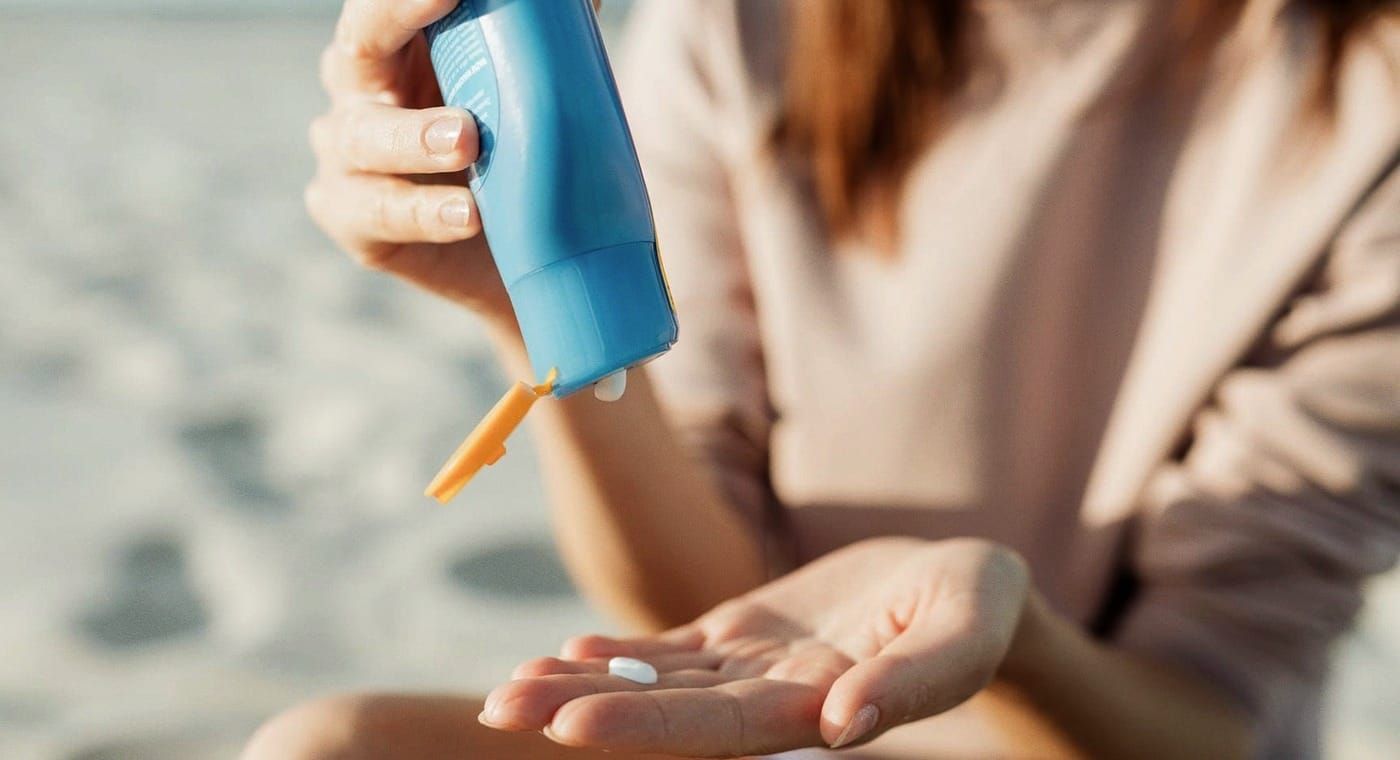
The American Academy of Dermatology suggests about 1 ounce, roughly enough to fill a shot glass, to cover all the skin your clothes do not cover, and at least 1 teaspoon for the face, about the length of your index and middle fingers. Apply it about 15 minutes before going outside. The AAD also notes that many people apply only 20 to 50 percent of the amount needed to get the SPF on the label, which is why a visibly generous, even layer matters more than the number on the bottle.
Reapply about every two hours, and immediately after swimming, heavy sweating or toweling off, whatever SPF you are using.
Are tinted sunscreens and iron oxides worth it for pigmentation-prone skin?
Standard sunscreens filter UV rays, but visible light, the light you can see, also plays a part in skin darkening, melasma and post-acne dark marks. The American Academy of Dermatology notes this is particularly true for people with darker skin tones, and that tinted sunscreens contain iron oxide, which helps protect against visible light. It suggests a Broad Spectrum sunscreen labeled “tinted” with SPF 30 or higher for that purpose.
A 2025 randomized study following melasma patients through the summer found that a visible-light-protective tinted sunscreen reduced worsening of pigmentation more than an untinted sunscreen did. That is a meaningful finding, not a guarantee for every case of pigmentation, and it works alongside other treatment rather than instead of it. If dark marks or melasma bother you, a tinted sunscreen is a reasonable addition, and a dermatologist can advise on options beyond sunscreen.
Does UVA reach you through glass, indoors or in the car?
Yes. The American Academy of Dermatology notes that window glass blocks UVB rays but lets UVA rays through, and UVA is the type linked to wrinkles and age spots. That makes sunscreen worth wearing if you spend long periods near a sunny window, drive a lot, or sit with the sun on one side of a car, which adds up on long commutes and road trips. Clouds are no excuse either: the AAD says up to 80% of the sun’s UV rays can get through them.
Expiry and storage: does sunscreen go bad?
Yes. In the US, sunscreens are over-the-counter drugs, and the FDA requires an expiration date unless the maker’s testing shows the product stays stable for at least three years. If a bottle has no expiration date, the FDA says to treat it as expired three years after you bought it, so writing the purchase date on the bottle helps.
Heat speeds up how quickly a formula breaks down, and many US labels say to protect the product from excessive heat and direct sun, so avoid leaving sunscreen in a hot car or in direct sun at the beach for hours. If a sunscreen has changed color, separated or smells odd, replace it even if it is not out of date.
Common mistakes to avoid
- Checking only the SPF number and ignoring the words Broad Spectrum, which tell you about UVA protection.
- Assuming “water resistant” means waterproof and skipping reapplication after swimming.
- Applying a thin, sheer layer instead of a generous, even one.
- Skipping sunscreen on cloudy days or indoors, when UVA can still reach you through cloud cover and window glass.
- Storing sunscreen somewhere hot, which shortens how long it stays effective.
- Using a bottle with no date for years. Without an expiration date, treat it as expired three years after purchase.
Once you know what to look for on a label, texture and skin type narrow things down quickly. See our sunscreens for oily skin for lighter textures, chemical vs mineral sunscreen for filter types, and browse all our sunscreen guides for more.
Frequently asked questions
- What SPF should I use every day?
- The American Academy of Dermatology recommends a Broad Spectrum sunscreen with SPF 30 or higher, which blocks about 97% of UVB rays. For long days outdoors, or if tanning and dark marks are a concern, SPF 50 or higher gives a little more margin, partly because most people apply less than the label assumes. How much you apply and how often you reapply usually matter more than chasing the highest number.
- Does every sunscreen protect against UVA?
- No. In the US, only sunscreens that pass the FDA's broad spectrum test can say Broad Spectrum on the label. Products that are not Broad Spectrum, or that have an SPF below 15, must carry a Skin Cancer/Skin Aging Alert saying they have been shown only to help prevent sunburn, not skin cancer or early skin aging.
- Does a higher SPF mean I can reapply less often?
- No. The American Academy of Dermatology points out that a high SPF lasts the same amount of time as a low one; sunscreen breaks down with time, sweat, water and rubbing whatever the number on the bottle. Reapply about every two hours, and sooner if you have been swimming, sweating heavily or toweling your face.
- Do I need a separate sunscreen for my face and body?
- It is not essential, but many face sunscreens are formulated to feel lighter and to sit better under makeup than body sunscreens, and some are labeled non-comedogenic for acne-prone skin. A body sunscreen is usually fine on the face if it feels comfortable and does not cause breakouts.
- Is it worth buying a tinted sunscreen?
- It can be, especially if you deal with melasma, dark marks or post-acne pigmentation. Tinted sunscreens contain iron oxides, which also filter some visible light, and the American Academy of Dermatology notes that visible light can increase skin darkening, particularly on darker skin tones. Treat a tinted sunscreen as a helpful extra layer of protection rather than a replacement for a dermatologist's advice on stubborn pigmentation.
- Why do some imported sunscreens show a PA rating instead of Broad Spectrum?
- PA ratings come from a Japanese system used on many Asian sunscreens, and Europe uses a UVA logo in a circle; neither is part of US labeling. Sunscreens made under US rules show SPF and Broad Spectrum and list their filters in a Drug Facts box, while products made for other markets may use filters that US sunscreens do not.
Sources
- How to select a sunscreen , American Academy of Dermatology
- How to apply sunscreen , American Academy of Dermatology
- Sunscreen FAQs , American Academy of Dermatology
- Practice Safe Sun , American Academy of Dermatology
- Sunscreen: How to Help Protect Your Skin from the Sun , U.S. Food and Drug Administration
- Questions and Answers: FDA's regulatory actions on over-the-counter sunscreen , U.S. Food and Drug Administration
- Sunscreens: A Complete Overview , DermNet
- Comparison of visible light-protective tinted sunscreen to untinted sunscreen to protect melasma patients during summer: a prospective randomized investigator-blinded study , PubMed Central (NCBI)