Best picks Skin Care
Best Lip Balms for Dry, Chapped Lips: 4 Picks Compared
The short answer
For chapped lips, a plain, fragrance-free balm built on ingredients such as petrolatum, castor seed oil or shea butter is usually the simplest way to help them heal, and the American Academy of Dermatology suggests a thick ointment such as white petroleum jelly when lips are very dry and cracked. It also suggests avoiding camphor, menthol, peppermint and other flavorings, fragrance and lanolin until lips recover. Reapply often, stop licking or peeling, and wear a lip balm with SPF 30 or higher outdoors. See a doctor if lips have not improved in two to three weeks or the corners of your mouth keep cracking.
Key takeaways
- Plain, fragrance-free balms with petrolatum, castor seed oil or shea butter are the simplest way to help chapped lips heal.
- The AAD suggests avoiding camphor, menthol, peppermint and other flavorings, fragrance and lanolin while lips are chapped.
- Lip licking and peeling off flakes both make chapped lips worse.
- Outdoors, use a lip balm with SPF 30 or higher; the AAD suggests one with zinc oxide or titanium dioxide.
- Reapplying several times a day and before bed matters more than one thick layer.
- If lips have not improved in two to three weeks, or the corners keep cracking, see a doctor.
On this page
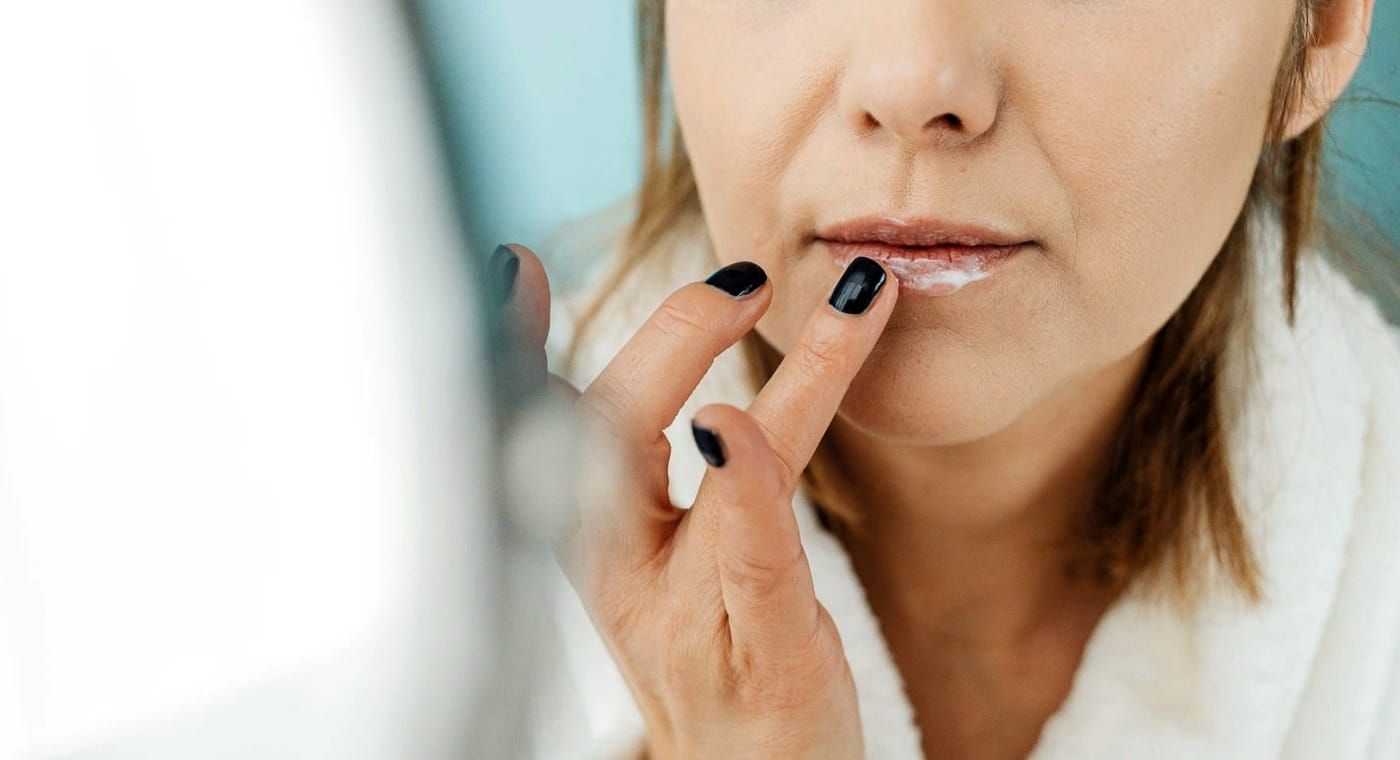
Chapped lips crack, flake and sometimes sting, and reaching for the wrong balm can make that worse rather than better. Cold, dry weather, sun and frequent lip licking are common causes, according to the American Academy of Dermatology, which is why lips suffer in winter wind, under indoor heating and on bright, dry days. The four products below cover a fragrance-free repair balm, plain petroleum jelly, a petrolatum-free beeswax stick and an overnight mask, followed by a plain look at which ingredients help chapped lips and which are worth avoiding.
| Product | Type | Key ingredients | May suit | Keep in mind | Where to buy |
|---|---|---|---|---|---|
| Aquaphor Lip Repair | Lip repair balm | Castor seed oil, Shea butter, Glycerin, Panthenol | Chapped, cracked or sensitive lips | It has no SPF, so add a lip balm with SPF 30 or higher outdoors | Check price: Aquaphor Lip Repair (affiliate) (opens in a new tab) |
| Vaseline Lip Therapy Original Mini | Petroleum jelly lip balm | Petrolatum (petroleum jelly) | Very dry, cracked or chapped lips | It has no SPF, so add a lip balm with SPF 30 or higher outdoors | Check price: Vaseline Lip Therapy Original Mini (affiliate) (opens in a new tab) |
| Burt's Bees Beeswax Lip Balm | Beeswax lip balm | Beeswax, Coconut oil, Sunflower seed oil, Peppermint oil, Vitamin E (tocopherol) | Lips that are dry but not cracked | Peppermint and lanolin are both on the American Academy of Dermatology's list of ingredients to avoid while lips are chapped | Check price: Burt's Bees Beeswax Lip Balm (affiliate) (opens in a new tab) |
| LANEIGE Lip Sleeping Mask | Overnight lip mask | Shea butter, Murumuru seed butter, Coconut oil, Vitamin C (ascorbic acid) | Dry lips that need a richer layer overnight | It contains fragrance, which the American Academy of Dermatology suggests avoiding while lips are chapped | Check price: LANEIGE Lip Sleeping Mask (affiliate) (opens in a new tab) |
Scroll sideways to see all columns.
How we chose these lip balms
We did not test these lip balms. We built this shortlist from each brand’s US product page and ingredient list, then checked every option against the American Academy of Dermatology’s advice on chapped lips:
- Ingredients that help: whether the balm is built on petrolatum, castor seed oil, shea butter or another ingredient the American Academy of Dermatology lists as helping chapped lips heal, or on a wax such as beeswax that seals in moisture.
- Ingredients that can irritate: flagging fragrance, flavorings such as peppermint, lanolin, camphor and menthol, which the AAD suggests avoiding while lips are chapped.
- Format: tube, stick or jar, since that changes how easily and how often you can reapply.
- Honest limits: who each balm suits, and who should look for something plainer or add an SPF lip balm outdoors.
Two of the four contain ingredients on the AAD’s avoid list, and their cards say so: they can suit lips that are dry rather than cracked, and the cards explain when to choose something plainer. We have not named an SPF lip balm yet, because none we could check on a brand’s US page met all of the AAD’s suggestions (SPF 30 or higher, zinc oxide or titanium dioxide, and no fragrance or flavoring), so the SPF section below explains what to look for instead.
Read more about how we research products.
The lip balms worth considering
For chapped or cracked lips, day or night
Aquaphor Lip Repair
Aquaphor says Lip Repair relieves dryness and soothes chapped, cracked lips, and describes it as fragrance-free, preservative-free and made for sensitive lips. Its listed ingredients include castor seed oil and shea butter, both on the American Academy of Dermatology’s list of ingredients that help chapped lips heal, and no petrolatum, lanolin or fragrance is listed. The squeeze tube is easy to carry and use through the day; it has no SPF.
- Format
- Squeeze tube
- Key ingredients
- Castor seed oil, Shea butter, Glycerin, Panthenol
- Standout feature
- Fragrance-free, preservative-free lip balm that Aquaphor formulates for sensitive, very dry and chapped lips
What the brand states
- Brand claims
- Relieves dryness and soothes chapped, cracked lips; seals in moisture; specially formulated for sensitive lips
- Free of
- Preservatives and fragrance (brand claim)
- Listed ingredients
- Opens with octyldodecanol, C18-38 alkyl hydroxystearoyl stearate and castor seed oil; also lists glycerin, panthenol, shea butter, bisabolol and beeswax. No petrolatum, lanolin or fragrance is listed.
- Pack
- Squeeze tube, .35 oz
Source: Aquaphor's page (aquaphorus.com) , read .
Who it may suit
- Chapped, cracked or sensitive lips
- People who avoid fragrance
- Day and night use
Keep in mind
- It has no SPF, so add a lip balm with SPF 30 or higher outdoors
- Aquaphor notes its website ingredient list can differ from the pack, so check the tube you buy
May want something else: Long daytime sun exposure without an SPF lip balm.
Based on brand-published product information, last checked November 28, 2026.
For the plainest petroleum-jelly seal, on a budget
Vaseline Lip Therapy Original Mini
Vaseline’s US page lists two ingredients for Lip Therapy Original Mini: petrolatum, which the brand calls Vaseline Jelly, and Yellow 5 Lake, a color additive. Petroleum jelly is an occlusive that slows water loss, and the AAD suggests a thick ointment such as white petroleum jelly when lips are very dry and cracked. The jar pictured on the same page reads “original + vitamin E”, so check the label on the jar you buy, apply it with a clean fingertip, and add an SPF lip balm outdoors.
- Format
- Mini jar
- Size
- 0.25 oz (7 g)
- Key ingredients
- Petrolatum (petroleum jelly)
- Standout feature
- Petroleum jelly in a pocket-size jar, which Vaseline says helps heal and prevent dry lips by locking in moisture
What the brand states
- Ingredients (US page)
- Petrolatum, Yellow 5 Lake
- Brand claims
- Made with Vaseline Jelly; helps heal and prevent dry lips by locking in moisture; non-sticky, non-greasy formula that melts onto the lips
- Pack
- Mini jar, net wt 0.25 oz (7 g); the front of the jar pictured reads 'original + vitamin E'
- How to use
- Scoop and apply to your lips; repeat as needed through the day
Source: Vaseline's page (vaseline.com) , read .
Who it may suit
- Very dry, cracked or chapped lips
- Overnight use
- A simple balm on a tight budget
Keep in mind
- It has no SPF, so add a lip balm with SPF 30 or higher outdoors
- A jar means applying with a fingertip, so keep it personal and use clean hands
- The jar pictured on the brand page says "original + vitamin E", but the US ingredient list shows only petrolatum and a color, so read the label on the jar you buy
May want something else: Long daytime sun exposure without an SPF lip balm.
Based on brand-published product information, last checked November 28, 2026.
For a petrolatum-free stick, once lips have healed
Burt's Bees Beeswax Lip Balm
Burt’s Bees says its original stick is formulated without petrolatum and calls it 100% natural origin, with beeswax, coconut and sunflower seed oils and vitamin E. It also contains peppermint oil for a tingle, and lanolin, both on the AAD’s list of ingredients to avoid while lips are chapped, so it is better for everyday dryness than for cracked or stinging lips. It has no SPF.
- Format
- Stick in a tube
- Size
- 0.15 oz (4.2 g)
- Key ingredients
- Beeswax, Coconut oil, Sunflower seed oil, Peppermint oil, Vitamin E (tocopherol)
- Standout feature
- Petrolatum-free beeswax stick with peppermint oil for a tingle, which Burt's Bees calls 100% natural origin
What the brand states
- Ingredients
- Beeswax, coconut oil, sunflower seed oil, peppermint oil, lanolin, tocopherol, rosemary leaf extract, soybean oil, canola oil, limonene
- Brand claims
- Moisturizes for 24 hours; peppermint oil for a refreshing tingle; 100% natural origin
- Formulated without
- Parabens, phthalates, petrolatum and SLS (brand claim)
- Pack
- Tube, 0.15 oz (4.2 g)
Source: Burt's Bees's page (burtsbees.com) , read .
Who it may suit
- Lips that are dry but not cracked
- People who want a petrolatum-free balm
- Everyday top-ups on the go
Keep in mind
- Peppermint and lanolin are both on the American Academy of Dermatology's list of ingredients to avoid while lips are chapped
- It has no SPF
- It contains beeswax and lanolin, so it does not suit people who avoid animal-derived ingredients
May want something else: Cracked, stinging or sensitive lips; People allergic to lanolin.
Based on brand-published product information, last checked November 28, 2026.
For an overnight mask, if fragrance does not bother you
LANEIGE Lip Sleeping Mask
LANEIGE’s overnight mask is a rich, leave-on layer with shea butter, murumuru seed butter and coconut oil, and the brand says it contains no lanolin or mineral oil. Fragrance is listed in its ingredients, which the AAD suggests avoiding while lips are chapped, so it suits lips that are dry but not irritated. It comes in a jar applied with a fingertip and costs considerably more than a basic balm.
- Format
- Jar
- Size
- 0.7 oz (20 g)
- Key ingredients
- Shea butter, Murumuru seed butter, Coconut oil, Vitamin C (ascorbic acid)
- Standout feature
- Leave-on overnight lip mask with shea and murumuru seed butters, designed to soften dry lips while you sleep
What the brand states
- Brand claims
- Overnight leave-on lip mask that softens lips and delivers moisture and antioxidants while you sleep
- Key ingredients
- Berry Fruit Complex, coconut oil, shea butter, murumuru seed butter, vitamin C
- Fragrance
- Fragrance (parfum) appears in the ingredient list of the Berry version
- Lanolin and mineral oil
- Does not contain lanolin; formulated without mineral oil (brand claim)
- Skin type
- All, normal, dry (brand)
- How to use
- Apply generously before bed; a thin layer can prep lips in the morning
- Pack
- Jar, 0.7 oz (20 g)
Source: LANEIGE's page (us.laneige.com) , read .
Who it may suit
- Dry lips that need a richer layer overnight
- People who like a scented, flavored lip product
- A smoothing layer before lipstick
Keep in mind
- It contains fragrance, which the American Academy of Dermatology suggests avoiding while lips are chapped
- It comes in a jar, so it is applied with a fingertip
- It costs considerably more than a basic balm
May want something else: Cracked, stinging or irritated lips; People who react to fragrance.
Based on brand-published product information, last checked November 28, 2026.
What actually helps chapped lips
Lips have a thinner outer layer than the rest of your face and very few oil glands of their own, so they lose moisture quickly and recover slowly once they crack. Two things matter most for healing them.
Occlusive ingredients seal moisture in
An occlusive forms a thin film over your lips that slows water loss while the skin underneath repairs itself. Petroleum jelly is the simplest example, and the American Academy of Dermatology lists it, along with castor seed oil, ceramides, dimethicone, hemp seed oil, mineral oil and shea butter, among the ingredients that help chapped lips heal. For very dry, cracked lips it suggests a thick ointment such as white petroleum jelly, which seals in water longer than waxes or oils; beeswax balms form a lighter film.
SPF matters outdoors
Lips can sunburn like the rest of your skin, and the AAD notes that the sun burns dry, chapped lips more easily, which could trigger cold sores. It suggests a non-irritating lip balm with SPF 30 or higher before going outdoors, one that contains zinc oxide, titanium dioxide or both, reapplied every two hours while you are outside. None of the four balms above has SPF, so treat an SPF lip balm as a separate daytime step: check its Drug Facts for zinc oxide or titanium dioxide, and its ingredients for flavoring or fragrance.
Browse mineral SPF lip balms on Amazon (affiliate) (opens in a new tab)Ingredients that can irritate already-chapped lips
Many popular lip products are built around a cooling or tingling sensation, which can feel satisfying but is not the same as healing. The American Academy of Dermatology says burning, stinging or tingling means a product is irritating your lips, not that it is working, and it suggests avoiding these ingredients while lips are chapped: camphor, eucalyptus, flavorings (cinnamon, citrus, mint and peppermint can be especially irritating), fragrance, lanolin, menthol, octinoxate or oxybenzone, phenol (or phenyl), propyl gallate and salicylic acid. Octinoxate and oxybenzone are sunscreen filters, which matters when you choose an SPF lip balm. If a balm makes your lips sting or burn, switch to a plain, fragrance-free one until they recover.
Habits that keep lips chapped
Even the right balm struggles to keep up with habits that damage lips throughout the day.
Lip licking
Licking dry lips feels like it helps, but saliva evaporates quickly and leaves lips drier than before. DermNet notes that licking also makes cracks at the corners of the mouth worse. Reaching for balm instead of your tongue is a small habit change that makes a real difference.
Peeling and biting
Pulling off flakes of dry skin can tear the healthy skin underneath along with the dead layer, which slows healing and can lead to small cracks or bleeding. Let a thick layer of balm soften flakes instead, and let them come away on their own the next time you reapply.
Under-reapplying
Balm only works while it stays on your lips, and eating, drinking and talking wear it off faster than most people expect. The AAD suggests applying a non-irritating balm several times a day and before bed.
Dry indoor air
Forced-air heating in winter dries the air indoors, and lips feel it first. The AAD suggests running a humidifier in your bedroom, especially if you breathe through your mouth at night.
Common mistakes to avoid
- Choosing a balm for its tingle. A cooling or tingling sensation usually signals mild irritation, not healing, especially on lips that are already cracked.
- Skipping SPF outdoors. Lips sunburn like any other skin, and they heal slowly when they do.
- Licking lips for quick relief. This dries lips out further within minutes.
- Peeling off flaking skin. Doing this can tear the healthy skin underneath and delay healing.
- Reusing an old or contaminated balm. A jar balm applied with a finger to cracked skin is worth keeping personal and replacing if it looks or smells off.
- Expecting a light everyday balm to fix badly cracked lips. Reach for a plain ointment and reapply generously until lips recover, then switch back to a lighter balm for daily maintenance.
When to see a doctor about chapped lips
Most chapped lips improve within two to three weeks of regular, non-irritating balm, cutting out licking and peeling, and using a humidifier. The American Academy of Dermatology suggests seeing a board-certified dermatologist if they have not, since an allergic reaction, a yeast infection or something more serious can also make lips dry and uncomfortable. It notes that actinic cheilitis, a precancerous condition, can turn one or both lips dry and scaly.
See a doctor sooner if you notice:
- cracks at the corners of your mouth that will not heal, which can point to angular cheilitis
- swelling, oozing, bleeding or intense pain
- a dry, scaly patch on the lip that does not go away
- cracked lips alongside a fever, or symptoms that started right after a new medication or lip product
For more on keeping the rest of your skin comfortable through dry weather, browse our skin care guides, including our list of moisturizers for dry skin and our guide to choosing a body lotion. If sun protection is part of what brought you here, our guide on how to choose a sunscreen explains SPF and Broad Spectrum in more detail.
Frequently asked questions
- Is petroleum jelly good for chapped lips?
- Yes. Petroleum jelly (petrolatum) is an occlusive, which means it forms a thin film that slows moisture loss while lips heal underneath. The American Academy of Dermatology lists it among the ingredients that help chapped lips and suggests a thick ointment such as white petroleum jelly when lips are very dry and cracked, because an ointment seals in water longer than waxes or oils.
- Why do lip balms with menthol, camphor or peppermint sometimes make chapped lips feel worse?
- The cooling or tingling feel can seem like a sign that a balm is working, but the American Academy of Dermatology says burning, stinging or tingling means the product is irritating your lips. It advises avoiding camphor, menthol, eucalyptus and flavorings such as mint and peppermint, along with fragrance and lanolin, until chapped lips recover.
- How often should I apply lip balm?
- More often than most people think. The American Academy of Dermatology suggests a non-irritating balm several times a day and before bed. Eating, drinking and talking wear it off, so reapply after meals rather than relying on one thick layer.
- Do I need a separate SPF lip balm?
- If you spend time outdoors, yes. The American Academy of Dermatology suggests a lip balm with SPF 30 or higher that contains zinc oxide or titanium dioxide, reapplied every two hours outside, and notes that sun can burn dry, chapped lips more easily, which could trigger cold sores. None of the four balms in this guide has SPF, so treat an SPF lip balm as an extra daytime step.
- Is an overnight lip mask better than a regular lip balm?
- Not necessarily. An overnight mask is a richer layer designed to stay on while you sleep, which can feel good on lips that are dry but not irritated. For cracked or stinging lips, the AAD's suggestion is a fragrance-free ointment such as white petroleum jelly, and many overnight masks, including the one in this guide, contain fragrance.
- When should I see a doctor about chapped lips?
- The American Academy of Dermatology says most chapped lips improve within two to three weeks of good care, and to see a board-certified dermatologist if they do not. See a doctor sooner for swelling, bleeding, oozing, a dry scaly patch that will not heal, or cracks at the corners of your mouth that keep coming back, which can be angular cheilitis.
Sources
- 7 dermatologists' tips for healing dry, chapped lips , American Academy of Dermatology
- How to apply sunscreen , American Academy of Dermatology
- Dermatologists' top tips for relieving dry skin , American Academy of Dermatology
- Angular Cheilitis: Symptoms, Causes, and Management , DermNet
Corrections
-
We described Vaseline Lip Therapy Original as petroleum jelly in a small tin with nothing added. Vaseline India sells it as a 4.5 g stick, and the tin sold in other markets also lists shea butter and vitamin E, so we corrected the description.
How we fix mistakes: corrections policy.